|
The Lighting Time Table
A Walk Through History & A Display Of Rare Antique
Lighting
|
| |
FIXTURE
STYLES FROM THE MID-1880'S
|
THIS PAGE WAS
CONTINUED FROM HERE
http://antiquesockets.com/lighting-timetable.html
As far as fixtures go, most electrical manufacturers including Westinghouse,
Edison-Bergmann, Thomson-Houston, etc., did not get into "the
fixture business" towards the end of the 1880's. They were
more inclined to produce and supply only a few of the electrical
parts needed to make fixtures.
This left the door open for large electrical supply houses (such
as E P Gleason, Central Electric, Pettingell-Andrews and many others),
as well as already known gas fixture companies (such as Mitchell-Vance)
and new rising companies such as Horn & Brannen to design and
sell the actual lighting fixtures. Those that were making electrical
systems pressed forward into larger concerns, most with ties to
supply companies providing parts for incandescent lighting as well
as bulbs. Many of these larger companies also bought out supply
companies, but left them running under previous management. The
public was not aware because the company names did not change and
it was just business as usual.
With so many independent inventors, inventions and new companies
springing up (after 1890), it would be hard to keep up with everything
or to display a complete demonstration here on such a small page.
I will however try my best to cover as much as possible for you
here and then finish up with much more complete pages at a later
date on this site.
Fixture styles changed as a part of several different factors over
these years.
Inventions of new parts
Example: The first shade holder that actually connected to the end
of a light socket tube was made by Bergmann. This shade holder had
a hard rubber ring connected to it. The ring was not removable,
and could only be used on sockets that used the hard rubber rings.
Later (1886-1888) new types of shade holders came out that clamped
on to the socket tube which could be used on other type socket shells.
New styles started showing up by 1890 and by 1899 there was quite
a variety. Keep in mind that these holders later came in so many
different shapes and styles as well as finishes, that it greatly
helped to actually change looks and styles of lighting. While some
in the early days used gas fitters and non-electric styles, these
would only serve to limit how your fixture could be configured.
More examples would be early fittings such as joints, nozzles, swivels,
bushings, extensions, ceiling flanges, canopies, socket clusters,
bracket stems, decorated brass or copper tubes, shades of all types,
etc., etc.
Please also keep in mind that once someone had an idea that was
successful, the following year everyone and his brother come out
with their own invention that works better, but was basically the
same thing. It looked different and used a different method of manufacturing,
but was basically still a shade holder (for example) that maybe
now instead of using two screws to tighten it to the socket, now
used one screw
Changes to those parts
Each of the examples talked about above could change in style every
couple or few years, while some even changed yearly which slightly
changed the look and appearance of fixtures. It can also be a great
dating method to follow the styles of what different manufactures
were offering at different times.
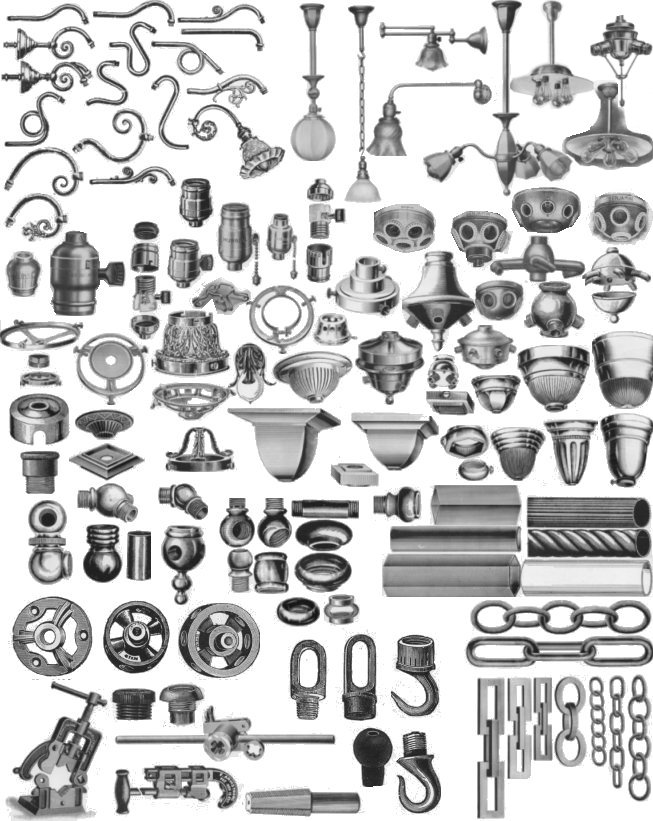
Most fixture manufacturers bought parts from an electrical or fixture
supply house (of their choice) of what was out there at the time.
To have their own style was not hard to accomplish. All that was
needed to make a fixture was some brass pipe, brass tubes, nozzles
to screw the sockets on to, a canopy, sockets, wire, threader/tap,
maybe some solder and a tube/pipe bender. Depending on what shape
they bent the tube into, they would have their own style.
I know that this already sounds easy to you, but if you want to
even make it easier, toss away the tube bender, threader and some
other tools and use already bent tube and ready made parts as shown
below.
Everything in the example below is taken from only ONE single catalog
supplier (to help you understand from this example) the simplicity
of this.
ALSO, keep in mind that during this period shown, the fixture maker
could choose from different parts and styles of their choice from
MANY different catalogs, which would help them to come up with an
even more unique design or fixture. Also there are many other items
I am not showing from the catalog to save space.
There were also some companies that invented and patented their
own styles of some small parts (which would give them their own
look), but for the most part companies just bought all of their
parts from distributors.
Exclusive Styles
At this time there were manufacturers that made fixture parts. Some
of these manufacturers were also electrical distributor houses.
Electrical distributors sold items that they created or put together
on their own, as well as items from fixture companies. While most
fixture companies sold to distributors, some fixtures that used
inventions that caused unique styles in lighting were held back
from large distributors to retain a unique look within the fixture
company styles. In some cases, this resulted in that particular
style to not become as well known or seen. It is like the difference
in shopping at Walmart and Macy's. This causes a rarity in looking
for some styles of lighting today. One such example would be a swing
arm sconce or pendant from the late 1890's to early 1900's. With
some swivel styles; While you may be able to find a one arm bracket
that swings in most any distributor catalog of the time, you would
have a hard time finding a double arm style without going to a Horn
& Brannen catalog, which was a more exclusive high end fixture
company.
New Inventions - The Domino Effect
During these early years there were many new break throughs in production
and manufacturing methods. The new manufacturing methods still play
a part in designs of today when it comes to materials used. In the
early years we can see this unfold slowly and how it can effect
the early lighting styles. We can see new styles of lighting come
out in the catalogs as new inventions in manufacturing take place.
One such example would be flexible wire.
There were major wire inventions to do with high voltage early on
such as in 1885 when J.J.C Smith invented the first hollow core
cable in which the conductors are twisted around a central tube.
In 1888 John Royal & Sons invented the first extrusion machine
for applying the rubber insulation continuously to a conductor in
the form of a pre formed tube. It was this invention that made for
lower cost wire.
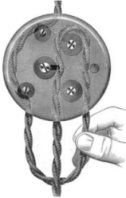
 When
Edison had done his demonstration in 1879, telegraph wire was used
as there was no real suitable insulated wire until about the end
of 1883 (still inferior) and costing about 10 cents a foot. In 1881
Edison had made a flexible band pendant by using a double piece
of webbing tape with the two wires sewed between its sides. When
Edison had done his demonstration in 1879, telegraph wire was used
as there was no real suitable insulated wire until about the end
of 1883 (still inferior) and costing about 10 cents a foot. In 1881
Edison had made a flexible band pendant by using a double piece
of webbing tape with the two wires sewed between its sides.
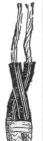 Now
with low cost (3 cents a foot) flexible braided wire showing up
in 1889/1890, new inventions of flexible pendants, coiling raising
and lowering devices and adjusting balls began being invented and
showing up in distributor catalogs. Now
with low cost (3 cents a foot) flexible braided wire showing up
in 1889/1890, new inventions of flexible pendants, coiling raising
and lowering devices and adjusting balls began being invented and
showing up in distributor catalogs.
Flexible wire actually played a big part in new lighting designs
of the future.
The low cost (poor man's) method of lighting was simply hanging
a wire with a socket and tin shade on it.
Flexible wire helped bring many new low cost inventions as well
as some big changes in not only regular designs, but also industrial
lighting designs as well.
This is only one of many examples of how a single invention can
greatly impact the lighting design time table.
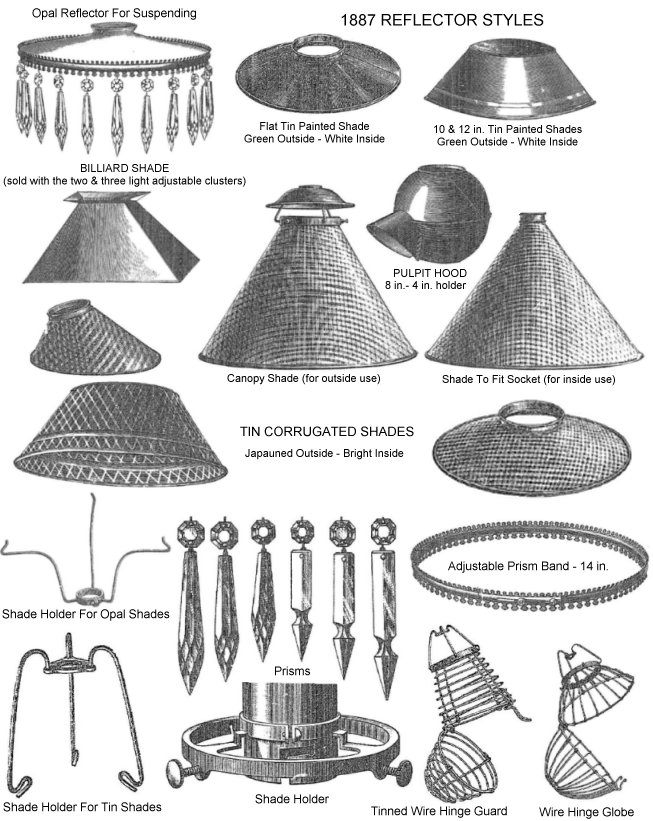
Reflector Shades And Unique Shade Holders
Different styles of shades and new methods of reflecting the light
was highly experimented with, which can make for some really unique
lighting examples. While some of these unique type fixtures were
around for many years, many of them did not survive long at all
which makes for some rare one of a kind type lighting.
Pre-1900 Socket Styles
Pre-1900 sockets can really add to the unique appearance of an 1800's
lighting fixture. From the three basic socket styles that were around,
it makes it easy to identify and date a fixture style at a quick
glance as pre-1900 or post-1900. In many cases, it is the socket
design that makes or breaks the fixture when it comes to style.
Someone can greatly damage not only the value of a pre-1900 piece,
but also it's unique appearance by changing the socket.
The new electrical code of 1899 caused an almost over night change
in lighting styles. This was because a full insulated lining was
now required in sockets, and there simply was not enough room in
these early styles to provide a full insulation between the electrical
parts of the shell and or shell cap. You can read more about this
here.
If you would like to research the actual codes or code history click
here.
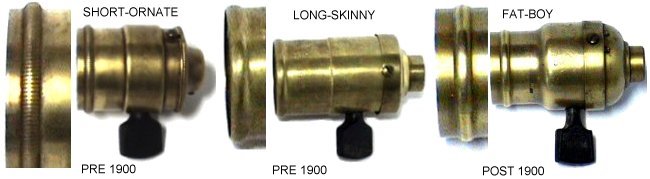
Before 1900, most companies all shared the two basic light socket
shell designs which are termed as "Short Ornate" and "Long
Skinny" shells. There are a couple of rare exceptions to the
above which bring in two more variances to the shells such as "Ultra
Short" in use with the Short Ornate where the shell was made
slightly shorter, and "Long Skinny Ornate" where one company
made an ornate style of the long skinny shell.
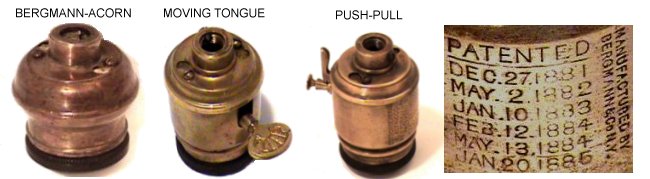
Edison-Bergmann had their own design which we simply call a "Bergmann".
A Bergmann type socket after 1890 is called an "EGE" (Edison
General Electric) shell. Unique design differences through the years
with these type sockets is simply material used (fiber and porcelain)
and rectangle and round screws. Later after EGE merged into GE (General
Electric) hard rubber keys started being used which greatly changed
the look of the design, but was one of the first steps in coming
closer to post 1900 designs. GE was the first to make a socket shell
that would comply with the new electrical code which is termed as
a "Fat Boy" shell (shown above), and was the new shell
style that everyone used after 1900.
Dating Fixture Styles
When it comes to actually dating fixtures, the catalog method is
best. If it is not found in a catalog, there is a process that you
need to go through. You would need to consider all of the parts
used in making the fixture, assess from dirt, wear and natural patina
if any parts had been replaced (sometimes taking the fixture apart
for rewiring can reveal hidden items of concern). Then keeping in
mind that fixture makers could have some old stock, date your items
looking for the newest piece. If you have assessed that the newest
piece was a replacement or early repair, you need to exclude it
from your parts list. Normally all of your parts together should
bring you to a date period within a couple or few years.
For more information about these types of sockets you can visit
the Socket Identification
section of the web site and look through different manufacturers
such as Bergmann,
Brush, Bryant,
Crown, EE&S,
Holmes & Gale,
Perkins,
Thomson-Houston
and Westinghouse.
| 1887
- INCANDESCENT LIGHTING STYLES |
For dating purposes,
it is good to know not only when a fixture style starts, but also
when it ends.
In these lighting sections, space does not allow me to duplicate
items from one year to the next. You may however be able to track
items more easily later as I fill in the catalog
database (a lot of work), or for now view
demos of my catalogs for sale or trade. The PDF demo files have
all of the pages in thumbnails which should be able to help you
see for now if an item was found in another years catalog. While
it would be difficult to tell if any changes were made to the item,
it should help you to at least track an item to see when it began
and stopped being offered for sale to the public.
See a demo of the
1887 E.P. Gleason Catalog
(or if you would like more information about it for trading
or to purchase a full copy of of it click
here)
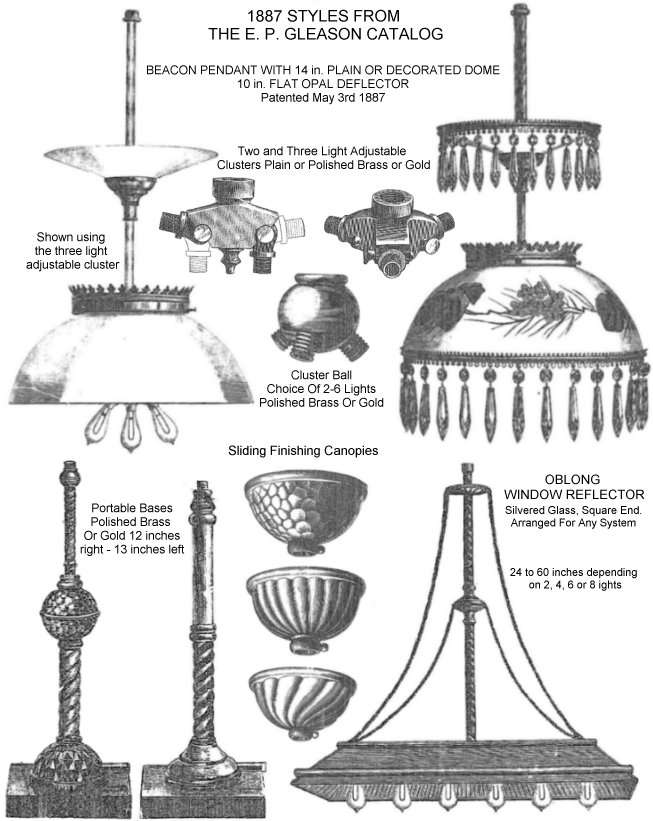
 Taking
note of a few items shown above would be styles that stuck, such
as the cluster ball which lived through all of these lighting time
frames. A new style of the ball came out in 1898 with an opening
on the bottom (and even more designs after 1900) but the basic ball
as shown continued up to 1900. The well known Handel lamp company
also used a ball cluster and went through many designs of different
balls, squashed balls, etc. The canopies shown, from top to bottom
the first one top is most rare and only shows up here in this catalog.
The other two stay around for almost ten years only changing slightly
in style which are shown as you continue through the years shown
on these pages. Many different manufacturer's had their own styles
of the window reflector also used as billiard lights. The swivel
clusters are also extremely rare to come by. Taking
note of a few items shown above would be styles that stuck, such
as the cluster ball which lived through all of these lighting time
frames. A new style of the ball came out in 1898 with an opening
on the bottom (and even more designs after 1900) but the basic ball
as shown continued up to 1900. The well known Handel lamp company
also used a ball cluster and went through many designs of different
balls, squashed balls, etc. The canopies shown, from top to bottom
the first one top is most rare and only shows up here in this catalog.
The other two stay around for almost ten years only changing slightly
in style which are shown as you continue through the years shown
on these pages. Many different manufacturer's had their own styles
of the window reflector also used as billiard lights. The swivel
clusters are also extremely rare to come by.
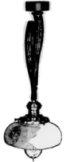
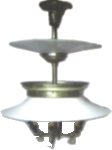
 The hanging fixture showing the opal deflector (in the catalog pictures
above) originally came from an E.P. Gleason gas lighting design.
The two piece style was used through this time frame, but more from
exclusive manufacturers and is rare to come by.
The hanging fixture showing the opal deflector (in the catalog pictures
above) originally came from an E.P. Gleason gas lighting design.
The two piece style was used through this time frame, but more from
exclusive manufacturers and is rare to come by.
Frink was successful in 1898/1899 with a combination fixture of
this nature by using a large flat opal shade as a deflector that
rested high over electric and gas lights. The start of Frink's success
with this style was when the fixture was adopted by the new york
board of education as their school room light. Up to 250 fixtures
were being installed into each new school and remodel.
 Later
this style continued to be used for both gas and electric, changing
slightly as new style opal shades were sold. Later
this style continued to be used for both gas and electric, changing
slightly as new style opal shades were sold.
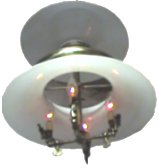
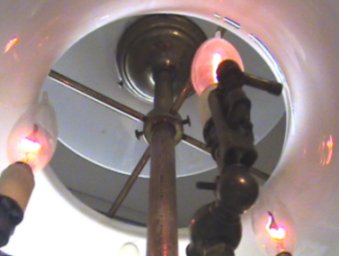
In the photo examples above and on your right, is shown an electrified
gas fixture that used a hand blown flat 17 inch white opal glass
reflector, with a 15 inch flat opal deflector.
The 17 inch shade had an opening of 9 inches which allowed light
to shine up to the deflector and reflect down.
I display this fixture using flicker bulbs to give the effect of
the way the gas burners would have caused the reflected red flames
to shimmer in the opal glass. Note that this fixture is for sale
at 2800.00 and can be converted to a period electrical cluster for
an additional 800.00-1200.00. It depends on your preference since
there were two basic styles of gas and electric. This cluster as
it is now (as found), is a gas cluster with gas valves still attached.
It gives it the gas flame look with the flicker bulbs. This was
converted to electric using small desirable and highly sought after
candle sockets that were sold from 1905 to 1921. (same sockets tiffany
used in their small desk and piano lamps). It can easily be converted
to an electric looking fixture. The only difference between the
gas and electric versions of this fixture would had been that it
would had been sold with the electric cluster and not a gas cluster.
At the time of writing this I have several types of period electric
clusters. One having 10 candle sockets of the type above that is
circular and points down (as standard in electric) or several electrical
clusters with standard size sockets 3, 4 and 6 lights.
See a demo of the
1887 E.P. Gleason Catalog
(or if you would like more information about it for trading
or to purchase a full copy of of it click
here)
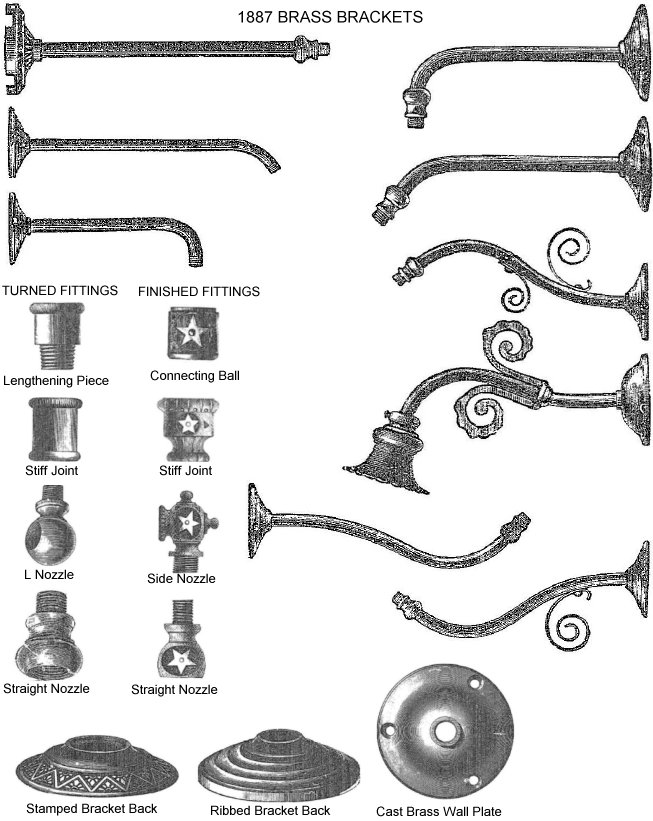
These nozzles, joints and brackets continued through until 1900,
the back plates are on the rare to come by side with the stamped
brass back plate being the most rare of all of the items shown above.
See a demo of the
1887 E.P. Gleason Catalog
(or if you would like more information about it for trading
or to purchase a full copy of of it click
here)
Take note above of the (unknown) Vitrite shade
holder (and sockets): There is little known about Vitrite.
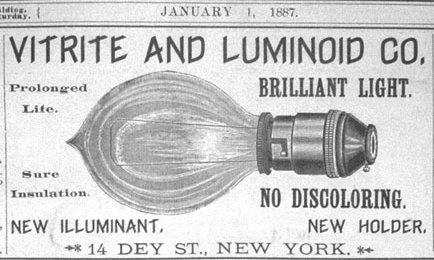 The
ad shown on the right is from the January 1, 1887 Electrical World
Magazine which also shows up in many other issues during this time
frame. The
ad shown on the right is from the January 1, 1887 Electrical World
Magazine which also shows up in many other issues during this time
frame.
There is one patent assigned to "THE VITRITE AND LUMINOID COMPANY"
of New York, for a switch (patent no. 362469).
The inventor is Alfred Swan of Great Britain.
The National Electric Light Association lists Vitrite as a member
in 1890 with "Theodore Mace" as receiver.
Along with other patents found for Mace is a filament patent (assigned
to him) filed in Jan. 1888 (patent no. 393391)
with Gilbert Scott Ram of Great Britain as the inventor. Both Ram
and Mace lived in New Jersey.
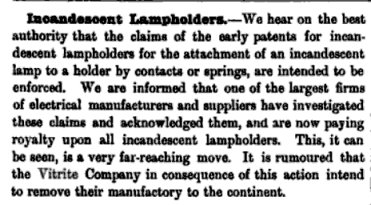 The
Electrical Engineer in their October 25, 1889 made mention of Vitrite
being part of the early Edison patent wars; and Vitrite's plans
to "remove their manufactory to the continent". The
Electrical Engineer in their October 25, 1889 made mention of Vitrite
being part of the early Edison patent wars; and Vitrite's plans
to "remove their manufactory to the continent".
Other then a State Treasurer's Tax Report for 1887 and one book
(Edisonia - page 89) which makes mention of "Vitrite-Luminoid"
in reference to Edison patents, I find it in no other catalogs or
reference in any electrical or electrical history books that I own.
The bulb and socket base seems to be a match to the known Loomis
base, so it could be (but not proven) that the bulbs and sockets
would be interchangeable. The "Loomis Electric Manufacturing
Company" patents that match the socket and bulb bases that
were applied for September 3, 1888 which are patent numbers 396583
and 412962.
There were no other matched bases during this time frame and to
this date (that I know of), there are no collectors that own a Loomis
lamp socket. Tto view loomis and vitrite documents (provided from
the allerhand collection) after the writing above click
here (up dated)
Also some pictures of a Vitrite socket have been donated from
kilokat (tim tromp's antique
bulb site) which can be seen here.
Also note that the (unknown) Vitrite shade
holder, is being shown on a socket tube about the same size as the
brush-swan. The style of the shade holder arms are bent and it uses
a screw to tighten around the socket tube. It could be that the
E.P Gleason shade holder shown in the 1888 catalog below had an
option size (1 1/16 inch collar) for the brush-swan or Vitrite socket.
The only clamp holder for sale in the 1888 catalog has a note under
the holder that simply says: "In Ordering Clamp Holders, state
name of Filament Lamp in use." There would be no need to ask
about the bulb base in ordering a holder unless there were different
size options to choose from.
There were no known clamp holders for the brush-swan socket (that
I know of) until 1890 but possibly 1891 before the option was present.
The shade holder (patent 409928)
shown on this page below in 1890 items being sold by Sawyer-Man
(as well as other catalogs up to 1892) did not have size options
for different "socket collars" in their catalog. However
the same holder shown again under 1892 Electrical Supply items provides
collar sizes as shown below:
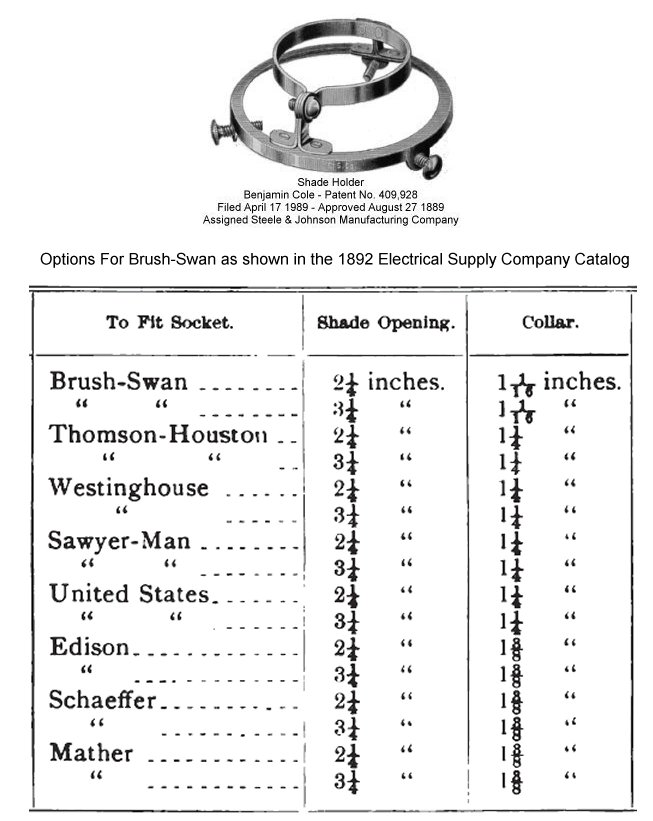
You will notice from the above the different collar sizes of 1 1/16th
inches for Brush-Swan, 1 1/4th inches for Thomson-Houston, Westinghouse,
Sawyer-Man and United States bases and 1 3/8th inches for Edison,
Shaeffer and Mather base sockets. Also note that (with the same
holder shown above) the 1891 and 1893 Central Electric Company catalogs
while not showing collar sizes did however start providing different
ordering part numbers for each socket type.
1888
- INCANDESCENT LIGHTING STYLES
|
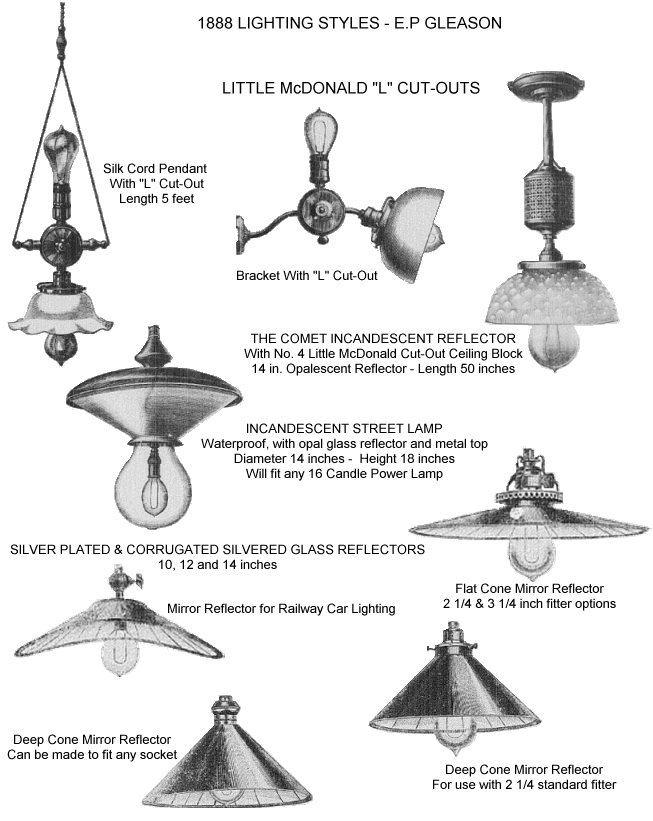
 While
the McDonald cut-outs and other items are quite rare, these reflector
shades are still found and owned by many collectors. While
the McDonald cut-outs and other items are quite rare, these reflector
shades are still found and owned by many collectors.
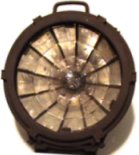
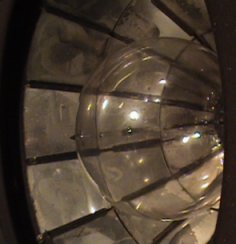 The
basic style of silvered mirror reflection was an awesome concept
and was used through our lighting table of time, as you will see
as you progress through these pages. The
basic style of silvered mirror reflection was an awesome concept
and was used through our lighting table of time, as you will see
as you progress through these pages.
These pictures show an 18 inch General Electric flood light that
used 36 individual pieces of silvered mirror glass to reflect the
light forward.
I don't think I need to tell you that this item featured with a
Mogul socket and such a large G.E Mazda Light Bulb, can really light
up a room.
While this flood light example might seem to be a bit much for your
lighting display or area of collecting, there are many different
forms of mirror reflecting examples to choose from.
The reflector shades shown above came in many different sizes and
shapes as time went on. Starting with these small tin shades, progressing
into 18 inch and then 35 inches as a standard. Later, close to 1898
even into huge ballroom and theater lights 170 x 120 inches and
using up to 150 light bulbs.
In 1888/1899 Frink was offering the choice on his fixtures of using
mirror glass or white opal glass, which made for a more elegant
looking fixture. Opal glass reflectors made in this style are extremely
rare and hardly ever come up for sale.
When purchasing reflectors for your collection, there are signed
and unsigned pieces. As always the signed shades are going to be
worth more unless it is a pictured catalog item such as an early
Bergmann design, or an ornate item.
A plain non-ornate 8 to 10 inch, green, tin, mirror shade (with
original glass intact) could cost you from 120.00 to 180.00. In
contrast an unsigned / unknown ornate (with metal design) of the
same size, could cost you up to 600.00 depending on condition and
design. If it can be proven early, such as a Bergmann, you could
be up to a few thousand dollars or more depending on condition.
Please keep in mind that we are talking about small shades here.
The larger the shade, the more it will be worth on the collectors
market as not many of the larger shades survived.
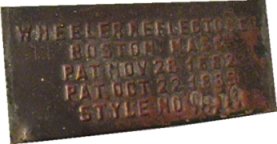 The
two most common manufacturers that signed items was Frink and Wheeler. The
two most common manufacturers that signed items was Frink and Wheeler.
William Wheeler of Concord Massachusetts started making reflectors
as early as 1880 for different non-electrical early lighting. Wheeler
started inventing electric ARC lighting reflectors and reflector
holders as early as 1882. He was making tin electric reflector shades
like those shown above by 1889. Wheeler signed metal shades will
have a metal stamped sheet tag soldered on the outside of the shade
like the one shown on your right. Small plain green signed Wheeler
cone shades (8 to 10 inches) can cost you from 300.00 to 450.00
depending on condition. (flat shades from 650.00 to 1800.00). Also
note that if the item is all intact with a period socket, price
can depend on the socket. For example, if the shade was sold during
the period of 1889 and had a fiber version of a Thomson-Houston
socket, you should expect to see it being sold from 1800.00 to 2500.00
for a flat or inverted shade as a fixture with a rare socket. (sometimes
an inverted shade can go a bit higher depending on the size and
who is selling it). The Wheeler Reflector company continued inventing
new reflecting solutions and the last patent that I find assigned
to them is US Pat. 2797312 - Filed May 12, 1954.
Note that the prices shown above are normally
seen in high end New York shops. You can normally cut these prices
in about half if purchasing from some place like eBay or auction
houses.
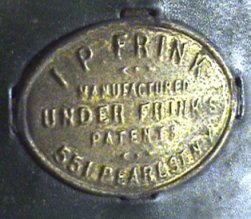 Issac
P. Frink of New York, NY. was one of the oldest manufacturers for
this type of reflection having his first patent issued April 10th
1860. Issac
P. Frink of New York, NY. was one of the oldest manufacturers for
this type of reflection having his first patent issued April 10th
1860.
He continued through the many years with new inventions in mirror
reflection for non-electric lighting and then in the 1880's started
ARC lighting reflection. Frink dived fully into electric lighting
reflection by the 1890's. With his background and many years of
experience, he produced some of the most elegant fixtures that were
in the same category as early Bergmann fixture designs.
On large reflectors you can sometimes still find a Frink paper label
on the glass and on the tin shades an oval stamped sheet brass or
tin tag as shown to your right. You can expect to pay from 450.00
to 850.00 for small green tin cone shades depending on condition
and a bit higher if it is a fixture complete with socket. Since
these Frink shades were sold mostly after 1900, many times you will
find them incorporated along with Hubbell sockets and pull chain
extenders. In cases like this, you need to allow for the value of
the items it is featured with. Please note that these price ranges
quoted are in the collectors market (or what you would expect to
pay in a down town New York shop) and were noted here in the year
2008.
Click
here (and then back on your browser) to see some small Frink
reflectors that were added in the 1898 Manhattan Electrical Supply
Company catalog, or
here (and then back on your browser) for a view of some of the
Frink styles found in the 1899 Frink catalog.
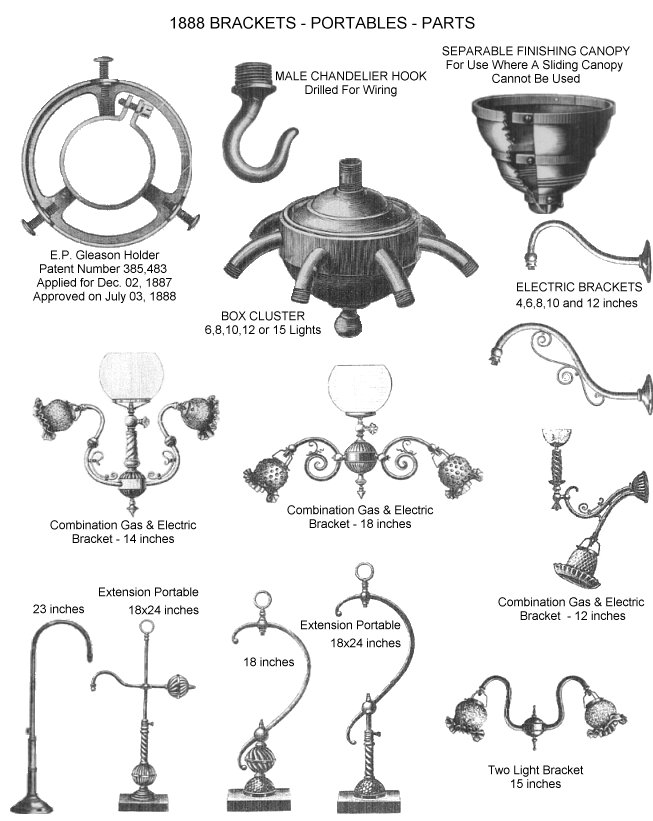
I should note here for you to watch portable
lamp styles as you progress in these time tables. You will notice
that standard canopies and canopy styles are mostly used on the
bases. 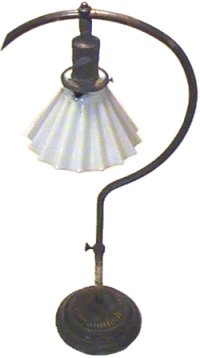 You
might also want to watch how the socket attaches and the different
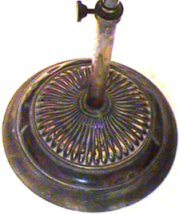
hardware used for adjusting the height of the lamp. Most of the
round bases are weighted using a heavy iron base (as shown below)
and the square bases use many different materials depending on the
maker and time period such as marble, alabaster, wood, heavy brass,
etc. You
might also want to watch how the socket attaches and the different
hardware used for adjusting the height of the lamp. Most of the
round bases are weighted using a heavy iron base (as shown below)
and the square bases use many different materials depending on the
maker and time period such as marble, alabaster, wood, heavy brass,
etc.
 Around
1899 and after 1900 many new styles of these portables came out,
which were much more ornate. Some were just simple lamps, others
with swing and double swing arms, long bent and double adjustable
arms made for some really wild designs. The shades that were used
with these lamps depended on who was buying and using the lamp and
in what environment. In later catalogs (when shades were sold with
these style lamps) a portable lamp might be shown with a tin shade
and offered at a real low price, while another catalog targeting
a different clientele, would show the same lamp with a nice ornate
shade and selling for many times more the price. So, as you find
these treasures, you may find one lamp with a nice shade and socket
and then later see one that has an old rusty tin shade looking like
something that you would not want to display on your vintage or
antique desk or end table. There is nothing wrong in a case like
this to add a nice matching socket or an ornate shade of the correct
period for the lamp. Around
1899 and after 1900 many new styles of these portables came out,
which were much more ornate. Some were just simple lamps, others
with swing and double swing arms, long bent and double adjustable
arms made for some really wild designs. The shades that were used
with these lamps depended on who was buying and using the lamp and
in what environment. In later catalogs (when shades were sold with
these style lamps) a portable lamp might be shown with a tin shade
and offered at a real low price, while another catalog targeting
a different clientele, would show the same lamp with a nice ornate
shade and selling for many times more the price. So, as you find
these treasures, you may find one lamp with a nice shade and socket
and then later see one that has an old rusty tin shade looking like
something that you would not want to display on your vintage or
antique desk or end table. There is nothing wrong in a case like
this to add a nice matching socket or an ornate shade of the correct
period for the lamp.
The lamp in the picture above is used as an example of dating mistakes
and to show an early contrast in styles. Note that the Perkins socket
used on this lamp has a patent date of June 21st 1892. The patent
date was for the socket shell which did not need to be improved
or changed until 1899 when the national electrical code started
requiring full insulation. So, these sockets were made up to 1899
and sold old grandfathered stock for a few years after. Shade holders
that are stamped with early 1880's and early 1890's patent dates
on them were still being sold as late as 1917. If you watch the
styles of these lamps, you will notice that the style shown here
with the tip that comes to a point (or cut at an angle) did not
come out until the year 1901 (but possibly as early 1899).
If you are interested in purchasing this item you can contact
me.
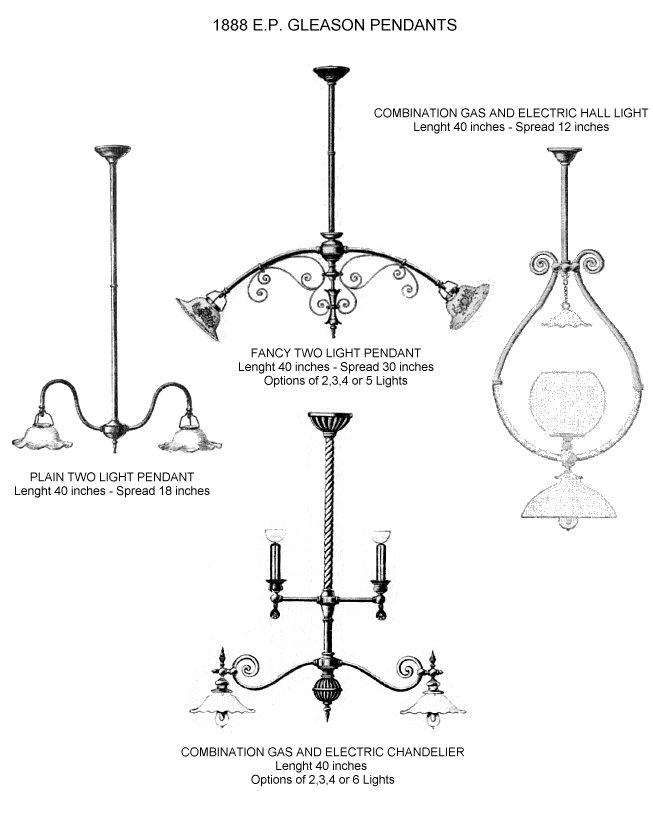
This 1888 E.P. Gleason Company catalog has not yet been scanned
into pdf, please contact
me if you are interested in a copy for sale or trade.
| 1890
- INCANDESCENT LIGHTING STYLES |
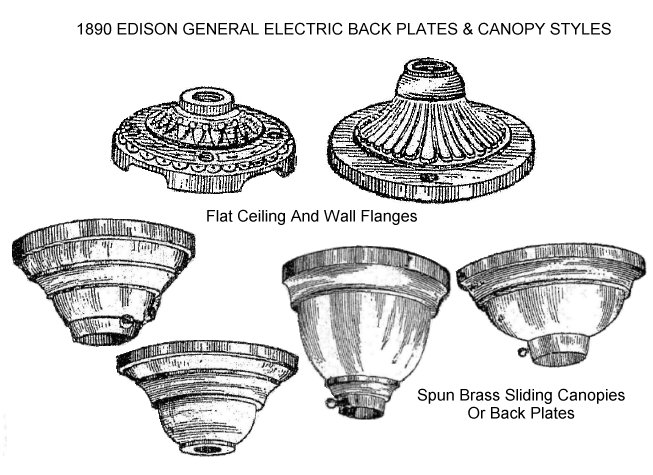
See a demo of the
1890 Edison General Electric Company Catalog
(or if you would like more information about it for trading or
to purchase a full copy of of it click
here)
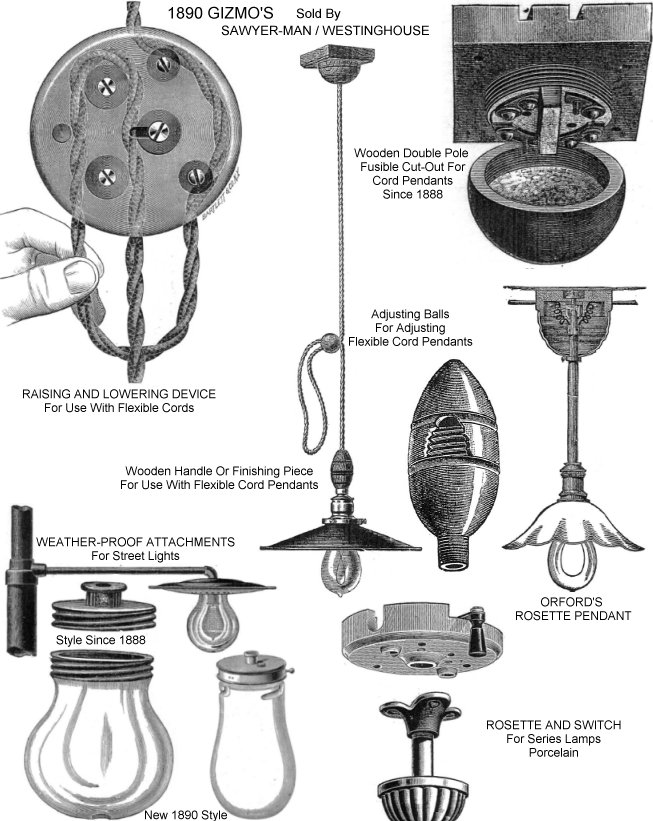
Note: new jar patented Oct.22.1889
See a demo of the
1890 Sawyer-Man Electric Company Catalog
(or if you would like more information about it for trading
or to purchase a full copy of of it click
here)
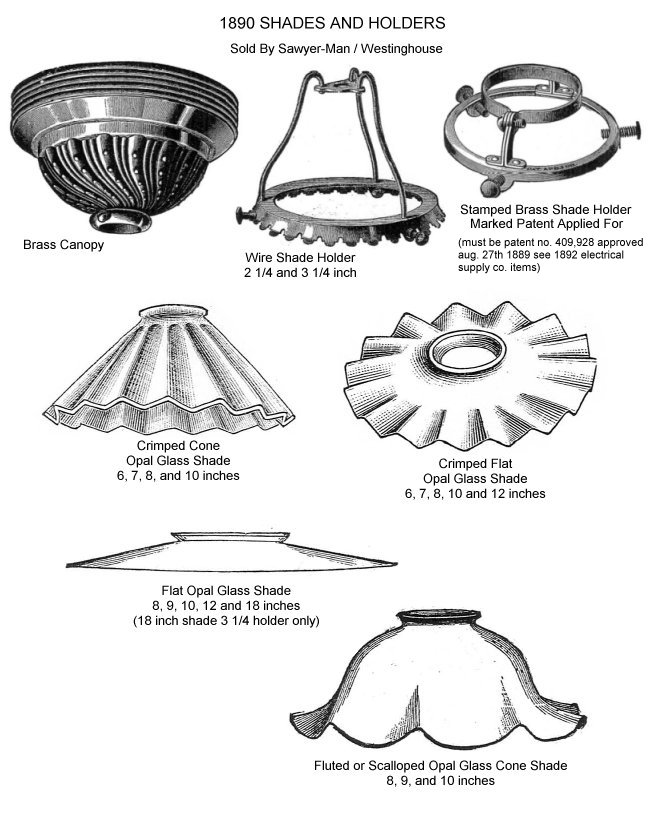
Note that these opal type shades were being sold before 1890, however
this is the first catalog that I have that shows them for sale.
There is a 10 inch flat opal reflector shown above in the 1887 E.P.
Gleason catalog. While this is the first place that I see these
shades all together, keep in mind that opal shades of different
types and styles had already been sold for years for different types
of non-electric lighting as well as early ARC lighting. Mass availability
of these type shades for electrical purposes may have started close
to this date along with the growing number of electrical distributors.
Following through the catalogs will show different size options
for these type shades as they became available. Also keep in mind
that these early shades were much thinner and lighter in weight
in these early days being all hand blown. They got much more heavy
and thicker after 1900 when they began being mold blown.
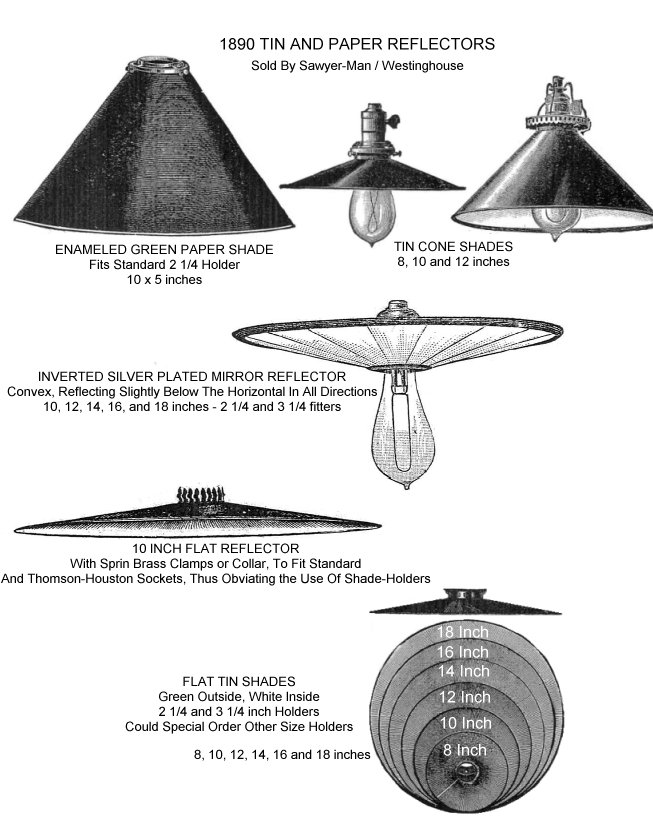
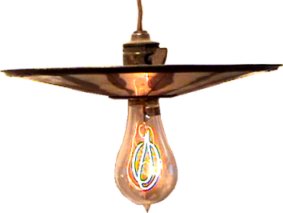 The
inverted reflector above in the 1890 catalog was patented by The
Wheeler Reflector Company of Boston Mass. October 22, 1889. This
new patent was for the beaded fillet that bent over the shade and
held the mirror glass in place. This new patent was an improvement
to their older November 28th 1882 patent (268,063)
that used a method of simply folding over the glass like a tab would
work. The old method would hold the glass tightly against the shade
which could cause the glass to easily crack. Many times with the
older style, even a small dent (or a good jar from a fall or hit)
could cause the glass to crack. The
inverted reflector above in the 1890 catalog was patented by The
Wheeler Reflector Company of Boston Mass. October 22, 1889. This
new patent was for the beaded fillet that bent over the shade and
held the mirror glass in place. This new patent was an improvement
to their older November 28th 1882 patent (268,063)
that used a method of simply folding over the glass like a tab would
work. The old method would hold the glass tightly against the shade
which could cause the glass to easily crack. Many times with the
older style, even a small dent (or a good jar from a fall or hit)
could cause the glass to crack.
This new design had a diamond shape bevel which caused the glass
to rest in a recessed position, so that when bent over the glass
it would hold it in place without forcing the glass down on to the
metal.
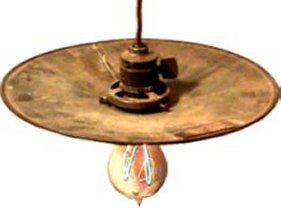 With
this new style the glass rested loosely in its own area and could
move freely. With this new design the shade could be dropped or
hit which would cause the glass to move with the collision, instead
of being forced to bend which would cause the breakage. With
this new style the glass rested loosely in its own area and could
move freely. With this new design the shade could be dropped or
hit which would cause the glass to move with the collision, instead
of being forced to bend which would cause the breakage.
This new patent method was also used on their street lighting shades
as well as their cone and flat shades of the time, which is the
reason for most shades always having the same patent dates on them.
The patents were not for the shade styles, but for the way that
the glass was held into the shades.
This fixture features a pre-1890 Thomson-Houston base socket with
red Vulcanized Fiber insides and comes with a Sawyer-Man Thomson-Houston
base bulb with a label on it. All glass is original and intact with
one small crack and is being sold for 1500.00. If you are interested
in this item you can contact
me.
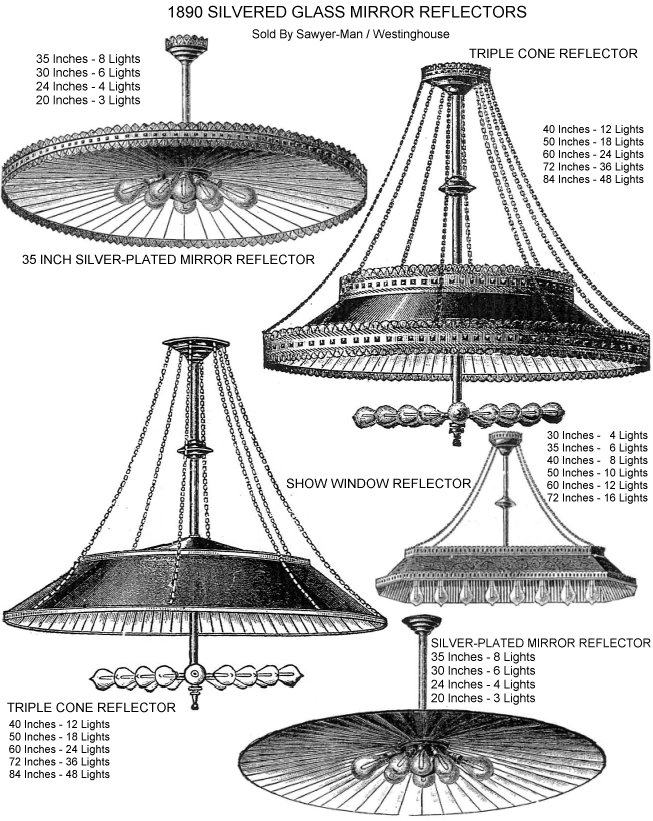
See a demo of the
1890 Sawyer-Man Electric Company Catalog
(or if you would like more information about it for trading
or to purchase a full copy of of it click
here)
1891
- INCANDESCENT LIGHTING STYLES
|
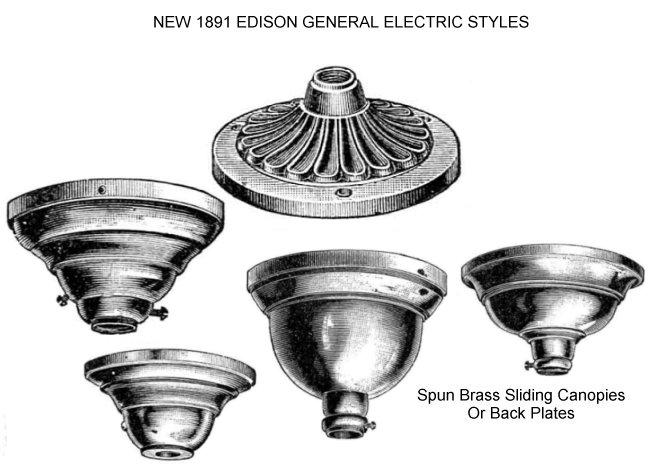
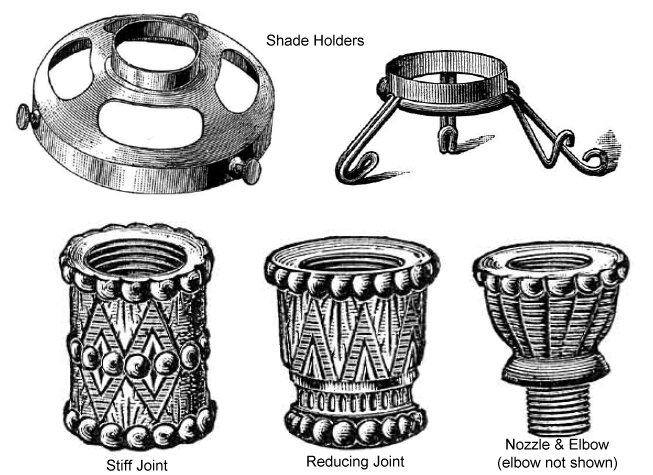
See a demo of the
1891 Edison General Electric Company Catalog
(or if you would like more information about it for trading
or to purchase a full copy of of it click
here)
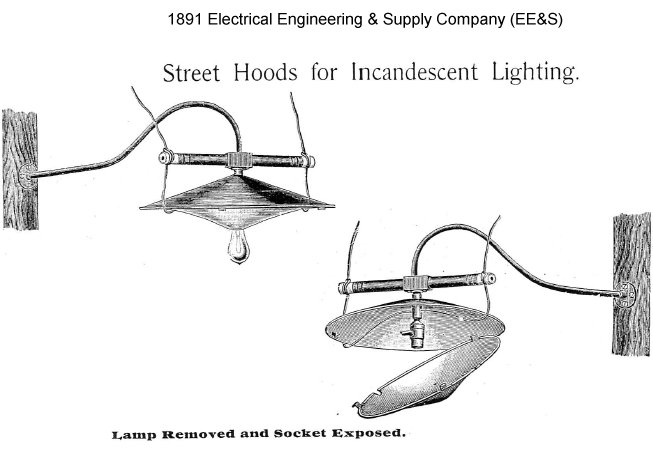
See a demo of the
1891 EE&S Company Catalog
(or if you would like more information about it for trading
or to purchase a full copy of of it click
here)
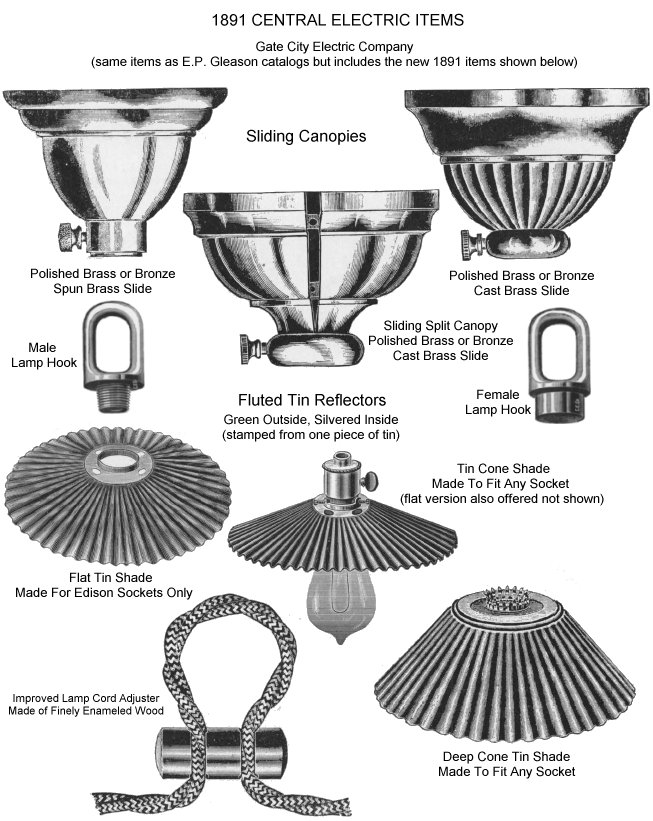
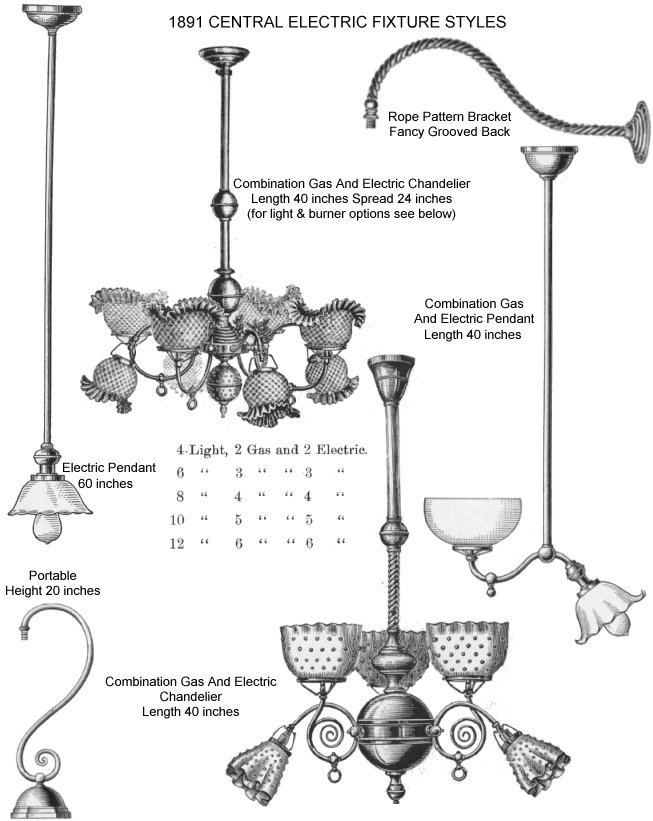
See a demo of the
1891 Central Electric Company Catalog
(or if you would like more information about it for trading
or to purchase a full copy of of it click
here)
1892
- INCANDESCENT LIGHTING STYLES
|
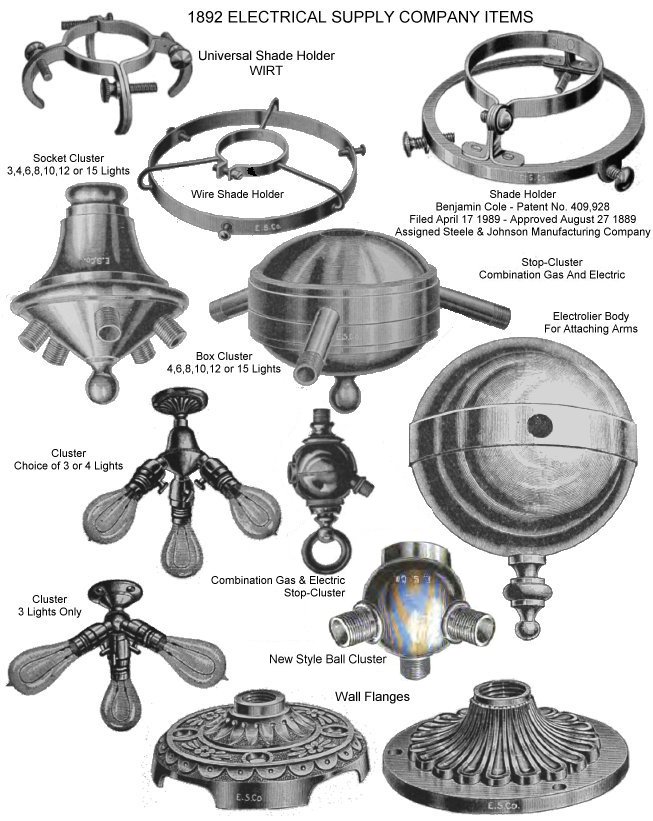
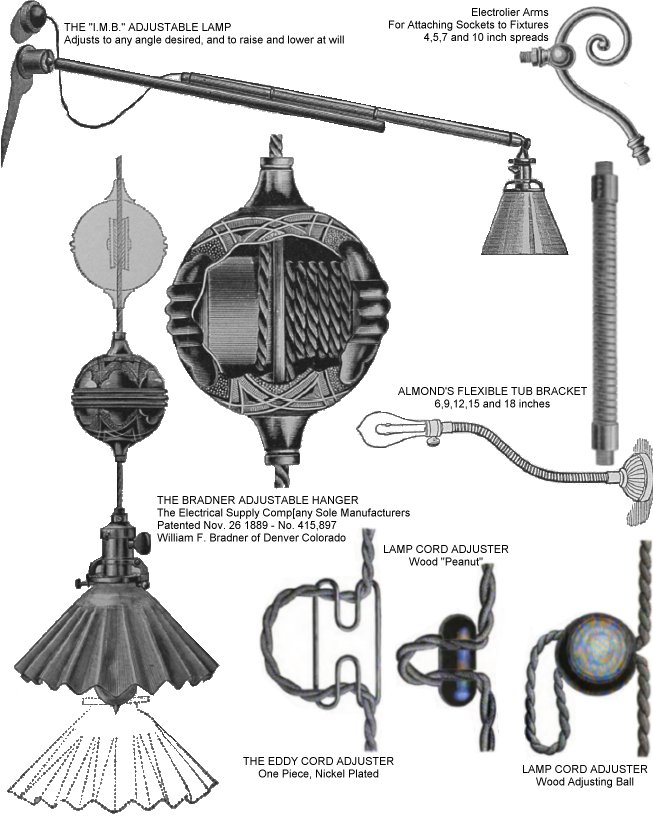
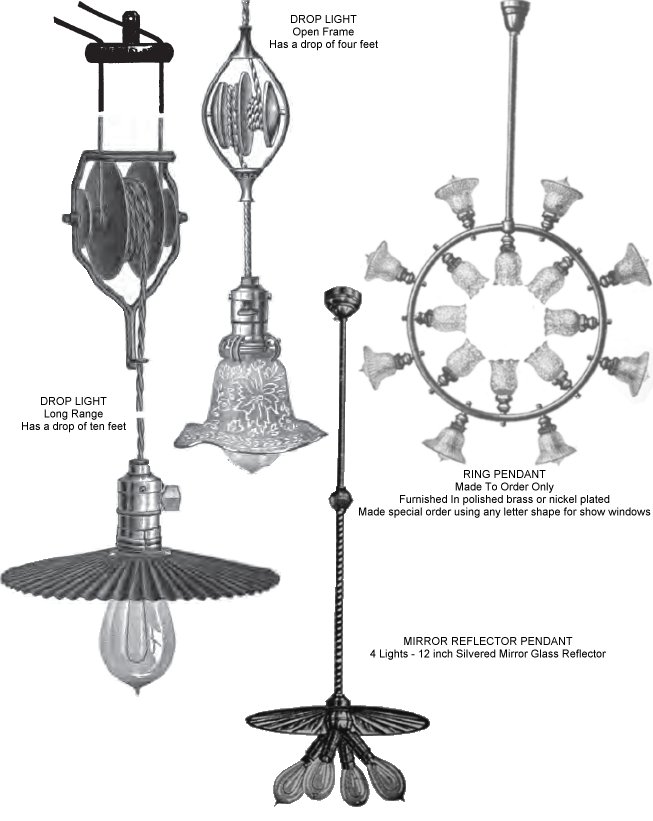
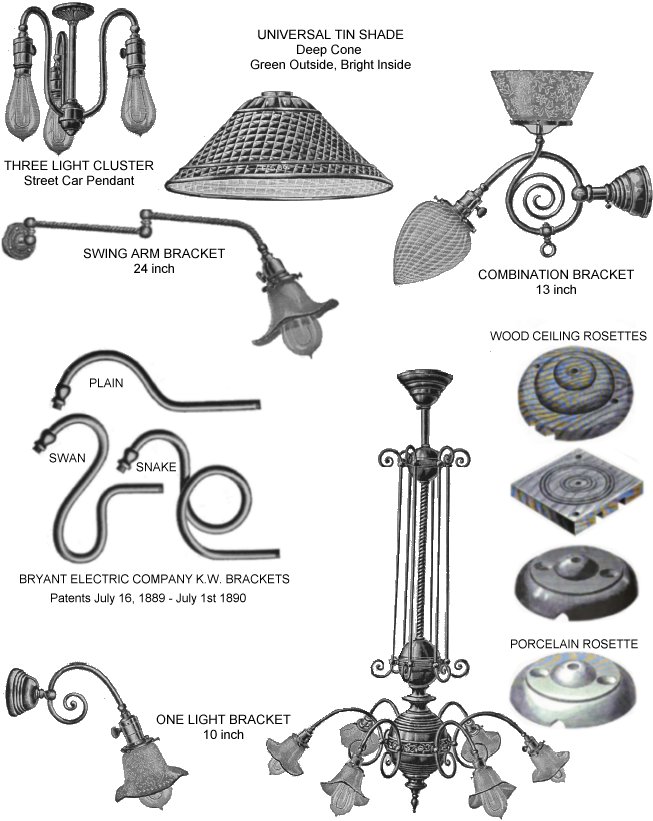
There were to many more fixture and portable designs in this 1892
catalog add into this page.
To see the pdf of all of the fixture and shade pages click
here (broken link) and then back on your browser.
See a demo of the
1892 Electrical Supply Company Catalog
(or if you would like more information about it for trading
or to purchase a full copy of of it click
here)
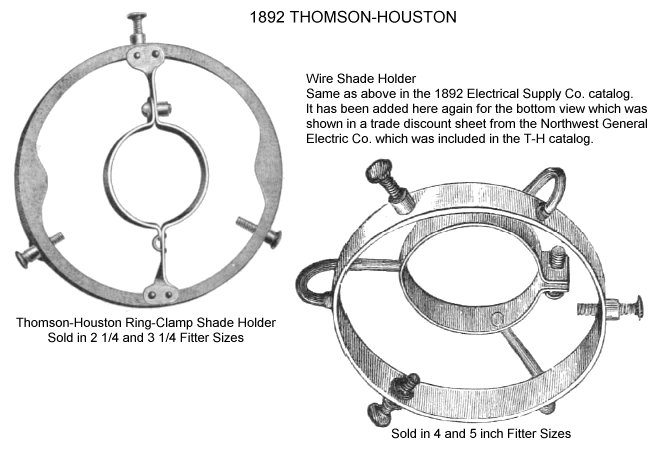
See a demo of the
1892 Thomson-Houston Company Catalog
(or if you would like more information about it for trading
or to purchase a full copy of of it click
here)
1893
- INCANDESCENT LIGHTING STYLES
|
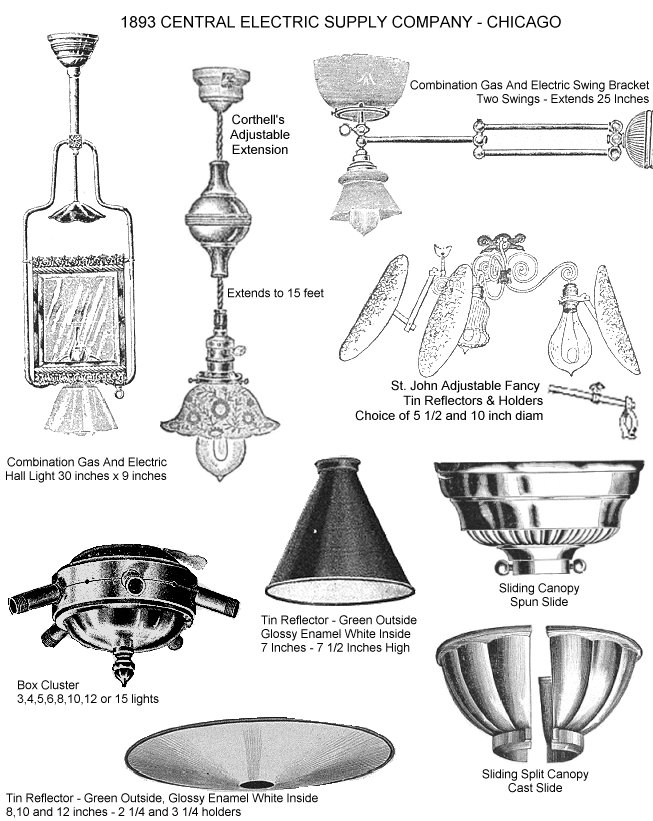
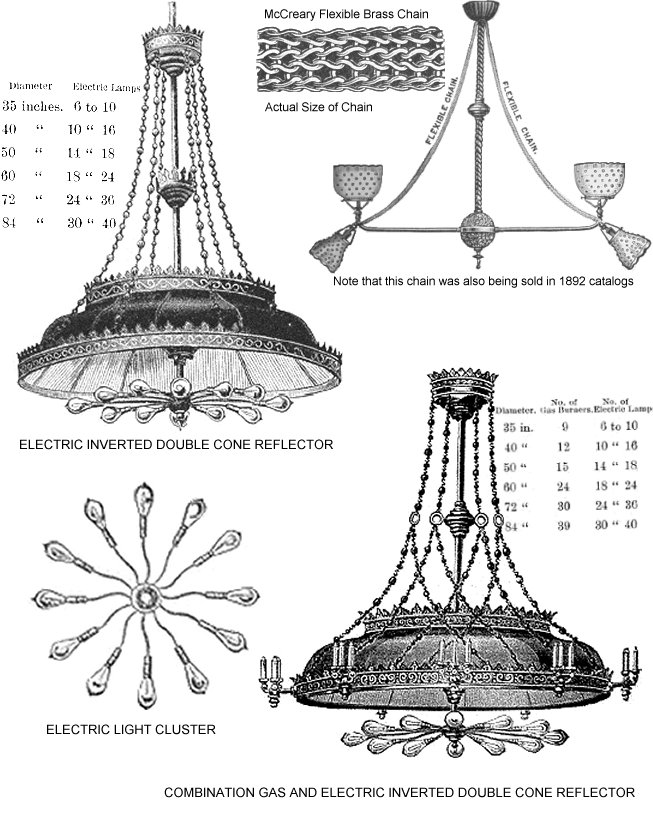
For more more fixtures, brackets, portable lamps and newel post
lamp designs sold in the Central Electric 1893 catalog click
here (46 megs) and then back on your browser.
See a demo of the
1893 Electrical Supply Company Catalog
(or if you would like more information about it for trading
or to purchase a full copy of of it click
here)
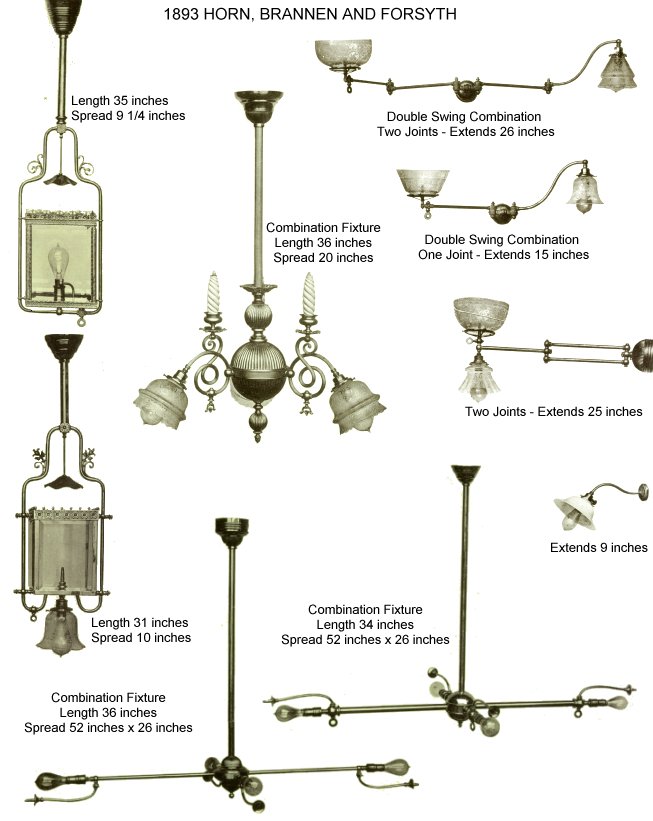
The above catalog comes from a private collector and is not offered
for sale or trade.
Note that the 1893
Taylor Goodhue & Ames, as well as the the 1893
Pettingell-Andrews catalog had the same 1893 items already shown
and had nothing to add to the above.
|
1894
- INCANDESCENT LIGHTING STYLES
|
TO CONTINUE TO THE NEXT SECTION CLICK BELOW
http://antiquesockets.com/lighting-timetable3.html
|